
Since Google I/O 2019, Google has called Android development “Kotlin-first”, and its docs still recommend Kotlin for new Android apps. So why is Flutter vs Kotlin still a live question for teams planning apps in 2027?
Because the real choice is not a language against a framework. Kotlin builds native Android apps, and Kotlin Multiplatform (KMP) shares Kotlin code with iOS. Flutter shares one Dart codebase, including the UI, across both platforms.
We build Flutter apps and supply Flutter developers, so we have an interest in this choice. We've tried to be fair about Flutter's weaknesses, and we name the cases where Kotlin is the better pick.
Key takeaways and a short verdict
- Android-only product with an Android team: stay with native Kotlin and Jetpack Compose.
- Strong Android and iOS teams that duplicate logic: use Kotlin Multiplatform to share business logic and keep native UI.
- Kotlin-heavy team that wants one shared UI: Compose Multiplatform has been stable on iOS since May 2025.
- Small team that needs iOS and Android fast: Flutter usually gets there with fewer people, because the whole UI is shared.
- Dart and Kotlin are both statically typed with null safety, so language quality should not decide this for you.
What are you actually comparing when you compare Flutter and Kotlin?
Flutter is Google's open-source UI toolkit, written in the Dart language, that compiles to native ARM code and draws every pixel itself.
Kotlin is a programming language from JetBrains. On Android it is the default choice, usually paired with Jetpack Compose, Google's native UI toolkit for Android.
Kotlin Multiplatform is JetBrains' technology for sharing Kotlin code across Android, iOS, desktop and web. The Kotlin Multiplatform overview says teams can share only business logic and keep native UI, or share UI too with Compose Multiplatform.
That gives four realistic options: Flutter, native Kotlin on Android, KMP with native UI, and KMP with Compose Multiplatform. The table below compares all four on the same criteria.
How do Flutter, Kotlin and Kotlin Multiplatform compare side by side?
| Criterion | Flutter | Native Kotlin (Android) | KMP with native UI | KMP with Compose Multiplatform |
|---|---|---|---|---|
| Language | Dart | Kotlin | Kotlin, plus Swift for iOS screens | Kotlin |
| What is shared across iOS and Android | UI and logic | Nothing, Android only | Business logic | UI and logic |
| UI layer | Flutter widgets drawn by its own renderer, Impeller | Jetpack Compose or Android Views | Compose on Android, SwiftUI or UIKit on iOS | Compose UI on every platform |
| Stability (as of November 2026) | Stable on iOS, Android, desktop and web | Stable | Core stable on Android, iOS, desktop JVM and server | Stable on Android, iOS and desktop; Beta on web |
| Iteration loop | Stateful hot reload | Compose Previews and Live Edit | Native tools on each platform | Live Edit on Android devices; Compose Previews from shared code |
| Native API access | Plugins, platform channels, FFIgen and JNIgen | Direct | Direct on each platform | Platform-specific Kotlin code |
| Team for iOS plus Android | One Flutter team | Separate iOS team needed | Kotlin developers plus iOS UI developers | One Kotlin team |
| Main weakness | Widgets are not the platform's own; some features still need Swift or Kotlin | No iOS at all | Two UI codebases to build and test | iOS developers must work in Kotlin and Compose |
Is Dart or Kotlin the better language?
Both are modern, statically typed languages, which means the compiler checks types before the app runs. Neither one is a weak link.
The Dart docs describe the language as type safe, using static type checking plus runtime checks. Dart has enforced sound null safety since Dart 3 in May 2023, so a variable cannot hold null unless you allow it.
Kotlin offers similar protections, and Google's Kotlin-first page highlights null-safety features, Java interoperability and coroutines for structured concurrency.
Kotlin's biggest practical edge is Java interop. Existing Android codebases can adopt Kotlin file by file, while Flutter usually enters an existing app as a separate module.

Which performs better on Android and iOS?
On Android, native Kotlin with Jetpack Compose is the reference point, since it is the platform's own toolkit. Flutter compiles ahead of time to native code and renders with Impeller, which the Flutter Impeller docs list as the default on Android API 29+.
In our view, users of typical business apps will not notice a difference between the two. Lists, forms and navigation run smoothly in both.
KMP compiles shared Kotlin logic to each platform's native format, so shared code runs natively on iOS as well. Graphics-heavy work such as camera pipelines or AR is where real differences appear, and it usually needs native code in all four options.
How mature is Kotlin Multiplatform in late 2026?
KMP was declared stable in November 2023, alongside the Kotlin 1.9.20 release. JetBrains then declared Compose Multiplatform for iOS stable in May 2025, with version 1.8.0.
The current Kotlin platform stability table lists KMP core as stable on Android, iOS, desktop JVM and server. Compose Multiplatform UI is stable on Android, iOS and desktop, and still Beta on web.
Google's Android guide to Kotlin Multiplatform says KMP is “officially supported by Google for sharing business logic between Android and iOS”. Many Jetpack libraries, including Room, DataStore and ViewModel, now support it.
The same page lists Duolingo, Cash App, Google Docs and Forbes among apps that use KMP. It also ranks Jetpack's watchOS, tvOS, Windows and web support as tier 3, which means untested in CI.
Where does Flutter still lead?
Flutter's biggest advantage is that one team ships the same UI on iOS and Android from the first release. Stateful hot reload shows code changes in the running app without a restart or lost screen state.
Flutter's web and desktop targets are also stable, while Compose Multiplatform for web is still in Beta. In the Stack Overflow Developer Survey 2024, 9.4% of all respondents reported using Flutter.
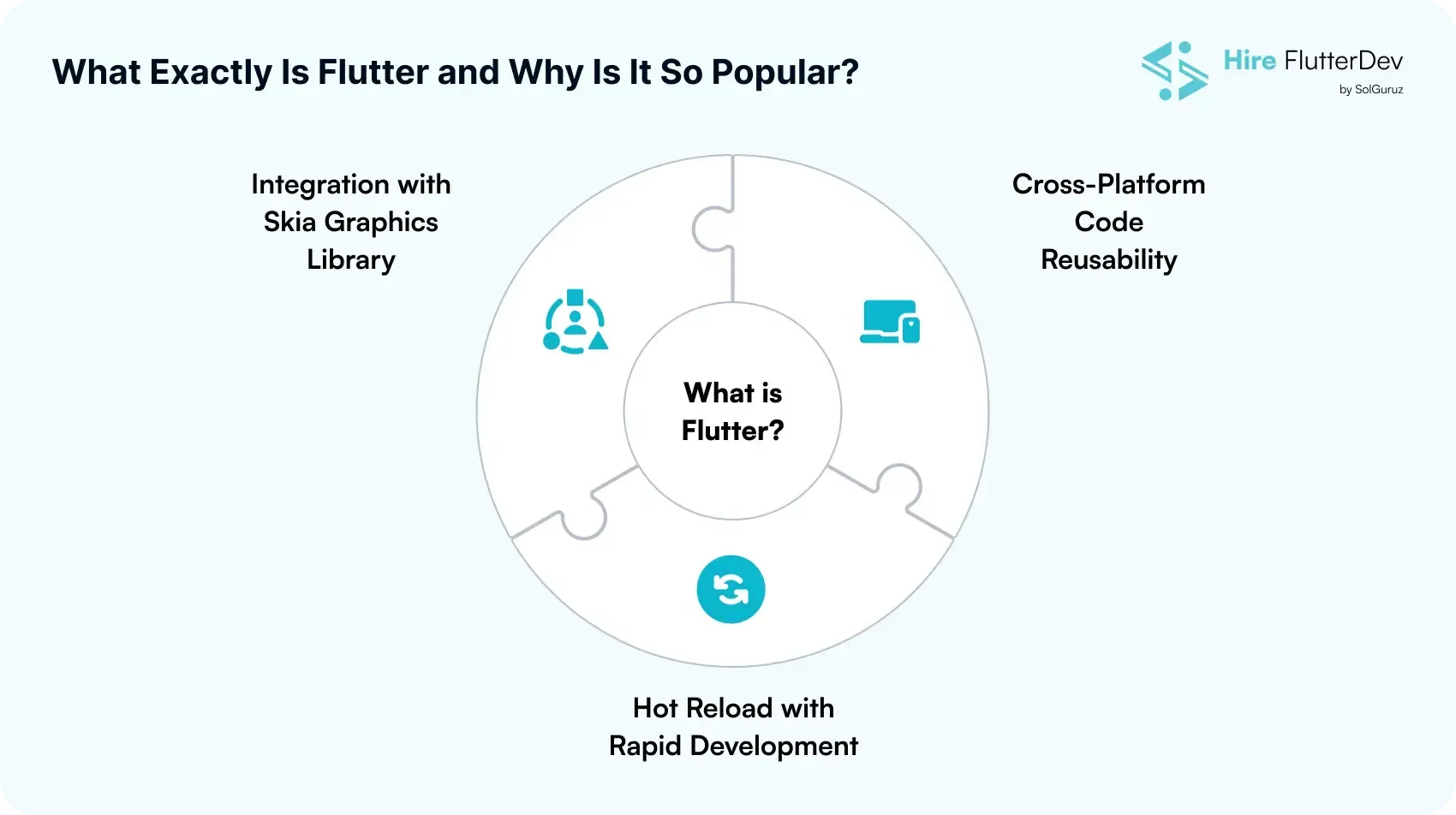


What are the honest weaknesses of each option?
Where Flutter falls short
- Flutter draws its own widgets, so native look and feel depends on the widget set and on your designers.
- Features such as home screen widgets still need native Swift or Kotlin code.
- Dart has a smaller community than Kotlin; 6% of 2024 Stack Overflow respondents used Dart, against 9.4% for Kotlin.
- New platform APIs often reach Flutter through plugins, which can lag behind the native SDK.
Where Kotlin and KMP fall short
- Native Kotlin alone covers only Android, so iOS needs a second team and a second codebase.
- KMP with native UI still means two UI codebases and two sets of UI bugs to fix.
- Compose Multiplatform asks iOS developers to work in Kotlin and Compose instead of SwiftUI.
- Library support beyond Android and iOS is uneven, so check every dependency before you commit.
If iOS is your main concern, our Flutter vs SwiftUI comparison covers the Apple side in detail.
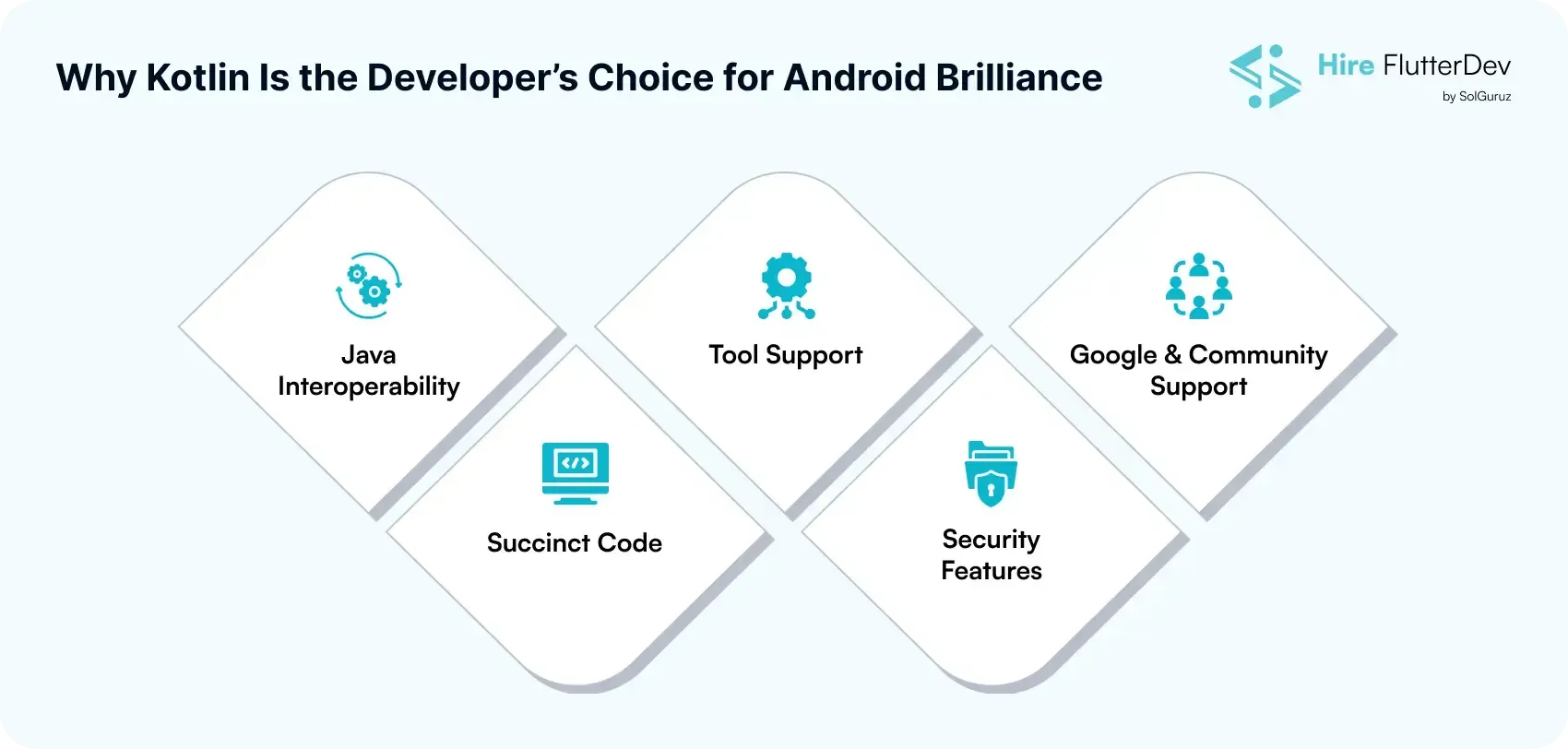
Who should pick Flutter, Kotlin or Kotlin Multiplatform?
- Pick native Kotlin if you ship on Android only, or Android is your main platform and you already employ Android engineers.
- Pick KMP with native UI if you have strong Android and iOS teams and want to stop writing business logic twice. You can adopt it one module at a time.
- Pick Compose Multiplatform if your team is Kotlin-heavy and wants a shared UI without learning Dart.
- Pick Flutter if you need iOS and Android, perhaps web or desktop too, from one small team with one shared UI.
Already running a native Android app? Flutter's add-to-app feature lets you embed Flutter screens without a full rewrite. Our Flutter app migration service plans that kind of phased move.

Common mistakes when choosing between Flutter and Kotlin
- Comparing a language with a framework. Compare full stacks, including the UI layer and the team you will need.
- Assuming KMP means one codebase for everything. With native UI, it shares logic only, and each platform keeps its own screens.
- Ignoring who maintains iOS. Decide early who will fix an iOS-only bug the week after launch.
- Choosing from vanity metrics. GitHub stars say little about whether a library fits your app or is still maintained.
Frequently asked questions
Is Flutter better than Kotlin?
Neither is better in general, because they solve different problems. Flutter shares one UI and codebase across iOS and Android, while Kotlin is the native language for Android. For an Android-only app, Kotlin is the natural choice.
Is Dart statically typed like Kotlin?
Yes. Dart is a type-safe language that uses static type checking, and it has enforced sound null safety since Dart 3 in May 2023. Kotlin is also statically typed with built-in null safety.
What is Kotlin Multiplatform?
Kotlin Multiplatform is JetBrains' technology for sharing Kotlin code across Android, iOS, desktop, web and server. Teams can share only business logic and keep native UI, or share UI with Compose Multiplatform. It has been stable since November 2023.
Is Compose Multiplatform ready for iOS production apps?
JetBrains declared Compose Multiplatform for iOS stable in May 2025. Its UI layer is stable on Android, iOS and desktop, and Beta on web. Check that every library you need supports it before you commit.
Which is better for an MVP, Flutter or Kotlin?
If the MVP must launch on iOS and Android, Flutter usually needs fewer people because the UI is shared. If the MVP is Android-only, native Kotlin avoids an extra layer. Either way, keep the first version small.
Can Flutter and Kotlin be used together?
Yes. Flutter apps call Kotlin code on Android through plugins, platform channels or JNIgen, which became stable in late 2026. You can also embed Flutter screens in an existing Kotlin app with add-to-app.
Choosing the right stack for your team
The right answer depends on your platforms, your current team and how much UI you want to share. Kotlin wins for Android-only work, KMP suits teams with strong native skills on both sides, and Flutter suits teams that want one shared app.
If Flutter fits your plan, our Flutter app development team can scope the build and the first release with you.